
Make-Up Classes Done Right: Keep Parents Happy, Protect Your Revenue
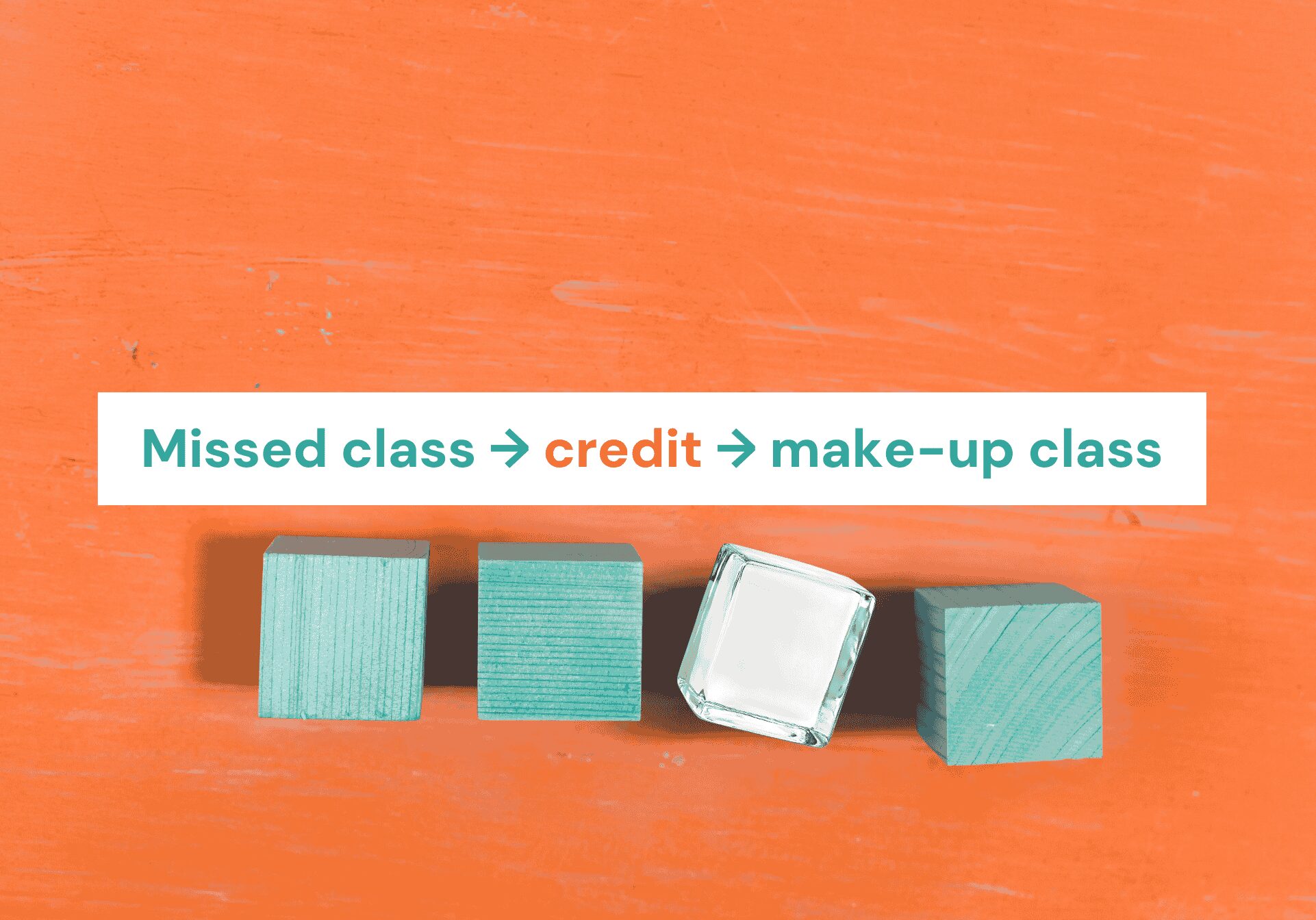
If you run children’s activities, missed classes are part of life.
Children get sick. Families travel. Plans change at the last minute.Parents expect flexibility — and rightly so.
That is why make-up lessons exist.
But here is the part many businesses miss:
Make-up classes are not just a “nice extra”. They are a business decision that directly affects your revenue, capacity, and operations.
Handled well, they increase trust, retention, and lifetime value.Handled poorly, they quietly fill your timetable with unpaid seats and create admin chaos.
This guide will help you think about make-up lessons clearly, strategically, and sustainably — without fear, without drama, and without WhatsApp overload.
What are make-up lessons (and what they are not)
In simple terms:
A make-up lesson is the right to replace a missed class with another session.
What it is not:
- a refund
- unlimited flexibility
- something that should be managed manually
From a business point of view, a make-up lesson is best understood as:
A time-limited credit for a future seat.
Once you see it this way, your policy decisions become much easier.
Why make-up lessons matter more than you think
Most children’s activity businesses are capacity-based.
You pay for:
- instructors
- venues
- equipment
- time slots
If a child does not attend, the seat usually cannot be resold at short notice.That capacity is gone forever.
When you allow make-up lessons, you are not “losing money” immediately —but you move demand into the future.
If this is not controlled, the future fills up with:
- make-ups instead of new customers
- full classes that generate no new revenue
- frustrated admins trying to juggle exceptions
The business theory behind make-up lessons (why this is not just opinion)
Make-up lessons are not a “children’s activities invention”.They are a practical application of service recovery theory in a capacity-constrained business.
In service businesses where capacity cannot be stored, missed attendance creates a conflict between:
- customer fairness,
- operational stability,
- and long-term profitability.
Research in service recovery management shows that the most effective solutions are neither rigid nor unlimited, but rule-based and contextual.
A study published in Soft Computing (Springer) highlights that recovery mechanisms work best when:
- flexibility is offered within defined boundaries,
- future operational impact is considered,
- and recovery decisions are system-driven rather than ad-hoc.
Flexibility without structure feels kind, but creates instability. Structure without flexibility feels unfair, but creates churn.
Make-up lessons exist to balance these two forces.
That is why successful children’s activity businesses treat make-up lessons as:
- controlled credits,
- with clear limits,
- clear expiry,
- and clear responsibility placed on the parent — not the admin.
For readers interested in the academic background of service recovery decision-making, you can explore this topic further here:https://link.springer.com/article/10.1007/s00500-019-03840-8
A simple numbers example (every manager understands this)
Let’s keep it real.
- Price per class: £9
- Autumn term: 10 classes
- 100 children enrolled
- Each child misses 3 classes on average
That creates:
- 300 missed classes
- Conceptual value: £2,700
The risk is not the £2,700 — you already collected it.
The risk is this:
- those 300 make-ups will try to land on your best time slots
- they will consume future capacity
- they will block new paying customers if unmanaged
This is why make-up lessons must have rules.
Your make-up policy must match your business model
There is no one-size-fits-all solution.Start by identifying what kind of business you run.
1. Capacity-critical classes (6–10 children)
Examples:
- early years programmes
- premium small groups
- specialist tutoring
Here, every seat matters.Uncontrolled make-ups can seriously damage profitability.
2. Capacity-flexible classes (15–25+ children)
- large sports sessions
- movement classes
- camps
Here, make-ups are more about:
- parent experience
- retention
- planning for instructors
3. Multi-location or franchise networks
Here, make-up lessons can be a competitive advantage:
- families can travel
- children can attend in another city
- churn is reduced
But only if everything is tracked and rule-based.
The 6 most common make-up lesson policies (with honest pros and cons)
1. No refunds, no make-ups
Best for: very flexible, low-touch businessesRisk: parents may feel unsupportedMinimum: still track absences for planning and performance insight
2. Unlimited make-ups, parent chooses freely
Best for: rare cases with excess capacityRisk: creates an invisible backlog that explodes later
3. Limited make-ups per term (recommended default)
Example: 1–3 make-up lessons per term
Why it works:
- parents feel supported
- expectations are clear
- make-ups feel valuable, not automatic
This is the most balanced option for most children’s activity providers.
4. Refunds for missed classes
Operational reality: expensive, messy, and encourages cancellations
Better alternative:Convert missed classes into account credit with:
- limited validity
- clear redemption rules
5. Make-ups only within a defined time window
- within the same term
- within 7–14 days after the timetable ends
This prevents credits from floating “in the air” for months.
6. Make-ups across locations (networks only)
A strong retention tool — especially for travelling families.
Must be limited by:
- programme type
- level
- availability
- time validity
The non-negotiable rules of a scalable make-up policy
If your business is growing, these rules are essential.
1. Limit the number
Unlimited make-ups always become a problem later.
2. Limit the time
Credits must expire.Otherwise, your future timetable becomes a repayment plan.
3. Control where they can be used
Same programme? Same level? Same location? Network-wide?
Decide intentionally.
4. Shift responsibility to the parent
Parents should manage make-ups themselves via a portal.
Not:
- WhatsApp messages
- emails
- “Can you just move us this once?”
5. Track the reason (optional, but powerful)
Illness, travel, schedule conflict — this data helps you:
- improve scheduling
- design better products
- spot structural problems early
Common mistakes that quietly hurt your business
- “Unlimited make-ups, we’ll deal with it later”
- Manual approvals via WhatsApp
- No expiry date
- Allowing make-ups into already full classes
- No visibility into unused credits
- Treating make-ups as admin work instead of a system rule
A strong default make-up policy (for most businesses)
If you want a practical starting point:
- 1–3 make-up lessons per term
- Valid until X days after the term ends
- Subject to availability
- Same programme and level
- Parent self-service booking
- Optional waitlist if classes are often full
Clear, fair, and sustainable.
Frequently asked questions
Should make-up lessons be unlimited?No. Unlimited credits almost always create future capacity problems.
Should we refund missed classes instead?Refunds increase admin cost and train the wrong behaviour. Credits are better.
How long should a make-up credit be valid?Short enough to prevent backlog. Same term or shortly after works best.
Can make-ups be used across locations?Yes — for networks — but only with clear limits and tracking.
What if all classes are full?Use limits, expiry, and optional waitlists. Do not oversubscribe blindly.
Why systems matter more as you grow
Managing make-up lessons manually works:
- with 10 families It breaks:
- with 40 It becomes impossible:
- with 100+
At scale, you need:
- automatic limits
- expiry rules
- self-service booking
- full change history (who changed what and when)
This is exactly why modern children’s activity businesses use systems like Zooza — to treat make-up lessons as a controlled credit system, not a daily admin problem.
Final thought
Make-up lessons exist because life is unpredictable.
Businesses that ignore them fall behind.Businesses that over-promise on them struggle later.
The strongest businesses:
- understand the reality
- set clear rules
- automate everything possible
- and let parents manage their own flexibility
That is how you keep parents happy — and protect your revenue.