
End-to-End Automation: The Hidden Economics of Fewer Admin Touchpoints
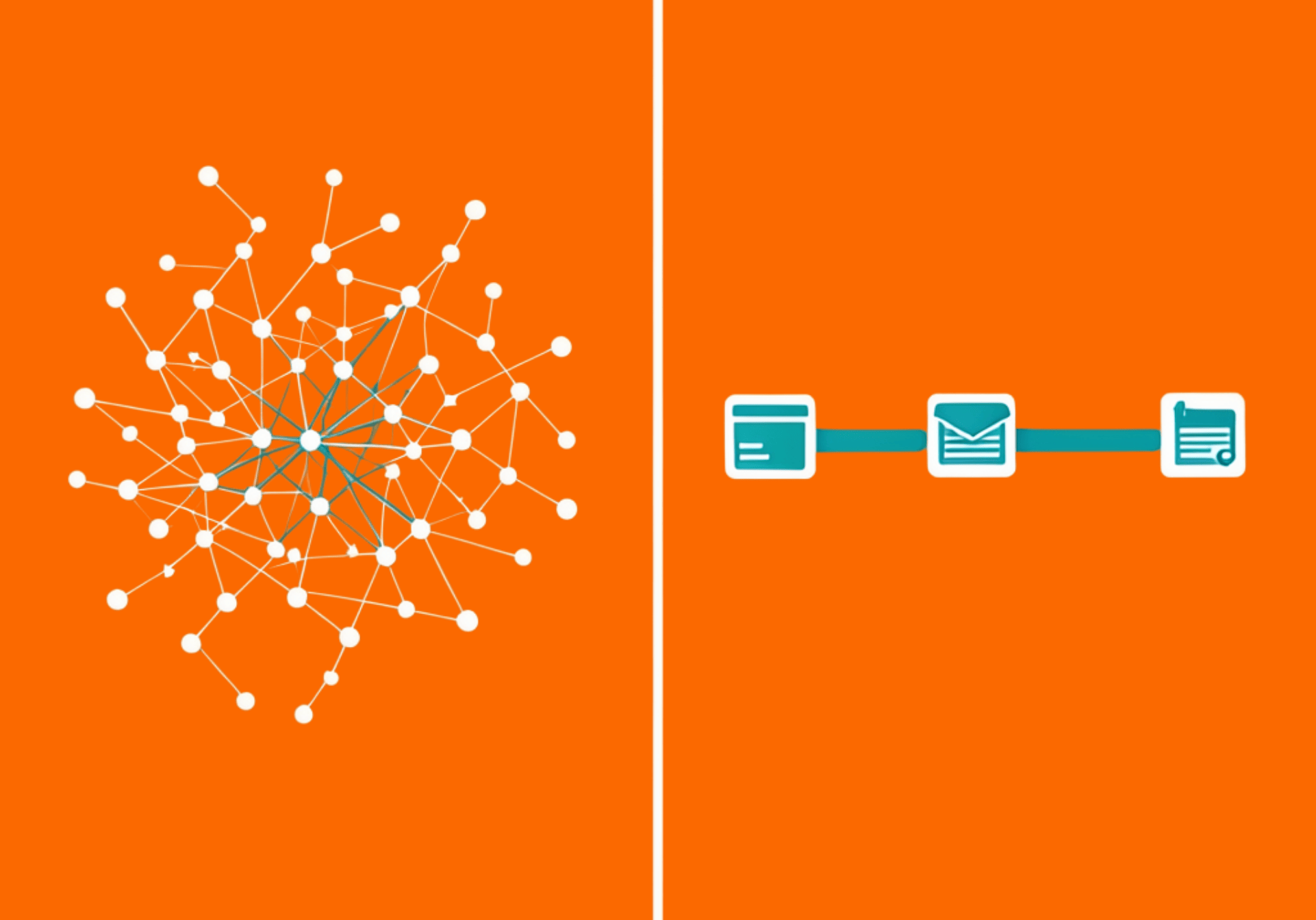
Running a booking-based business isn’t hard because you don’t know what to do.
It’s hard because you’re doing too much of it manually.
The true value of end-to-end automated processes isn’t that they make things “a bit faster.
It’s that it removes hundreds of small admin touchpoints that quietly steal time, create errors, slow cash flow, and make growth feel heavier than it should.
Whether you manage 30 bookings per term or 300, the underlying economics are the same. The only difference is when the pain arrives.
To make this concrete, we’ll use a “busy but normal” example (300 bookings in a term). The principles apply to smaller accounts too — they just hit the wall later.
TL;DR
- Manual operations don’t scale because small tasks compound across bookings.
- Real automation means the “smooth 95%” becomes zero-touch , not “2 minutes quicker”.
- Admin effort should live in two buckets only: edge cases + light oversight .
- End-to-end systems create leverage by connecting the whole flow: registration → payments → accounting → refunds → reporting .
Manual vs automated isn’t a feature debate — it’s an operations math problem
Most businesses don’t run on “bookings”.
They run on a chain of events that has to stay consistent across tools, people, and deadlines:
- A parent registers
- Money gets collected (reliably)
- Attendance happens
- Invoices and tax reporting stay clean
- Refunds and changes don’t break the system
- Renewals happen without chaos
When this chain is manual, it “works” — until volume increases, someone gets sick, the instructor cancels, payments fail, or admin is already overloaded.
Then you’re not managing a workflow anymore.
You’re stitching together outcomes with human effort.
The 95/5 rule: why the last 5% eats your week
Let’s take a realistic term:
- 300 bookings
- 95% of them are smooth
- 5% are edge cases
A common misunderstanding is:
“If 95% is smooth, we’re basically fine.”
In reality:
- If the 95% is still manual, it becomes your background noise — messages, updates, payment checks , invoice corrections, status changes.
- The 5% becomes your emergency work — and it always arrives in clusters (near deadlines, term starts, payment dates, renewals).
The goal of end-to-end automation is simple:
Make the smooth 95% disappear from the admin calendar, so you have capacity for the 5%.
That’s what “leverage” looks like in operations.
The science behind automation (simple, but brutal)
This is where “professor mode” matters, because automation has a logic to it. It’s not magic — it’s systems thinking.
1) Manual touchpoints compound error rates
Every time a human has to move data or make a decision across tools, you introduce risk:
- wrong amount
- wrong VAT group
- wrong invoice account
- wrong status
- wrong client
- wrong message
- late follow-up
One mistake is manageable. Mistakes multiplied across hundreds of bookings become a pattern.
2) Context switching is the hidden killer
Admin work isn’t hard because one task is hard.
It’s hard because you’re constantly switching between:
- messages
- spreadsheets
- booking system
- payment portals
- accounting
- instructor updates
- parent explanations
Context switching doesn’t just waste time — it increases mistakes and delays decisions.
3) Small exceptions create big bottlenecks
Admin work behaves like a queue.
If exceptions arrive faster than you can process them, backlog grows, quality drops, and your system becomes reactive.
A few edge cases at the wrong time can block everything else.
4) Real automation includes exception handling
“Automation” isn’t “we send emails”.
Automation is:
- the system knows what should happen next
- it triggers actions across connected tools
- it detects failures
- it escalates only exceptions
That’s the difference between a tool that helps and a system that runs.
Sources & further reading (the theory behind the chaos)
If you want to go deeper into the “why” behind admin overload, these references cover the core mechanisms: task switching (context switching), queues & bottlenecks, error rates in manual work/spreadsheets, and automated payment recovery.
Cognitive load & context switching
- Task switching has measurable switching costs (time + mental load), which explains why “quick admin tasks” still drain a day when they’re fragmented.
Queues, bottlenecks, and why exceptions cluster into backlog
- Queueing theory gives a practical way to think about bottlenecks and waiting time in operational flows.
- Little’s Law (L = λW) is the classic “why backlogs grow” relationship: if arrivals outpace service even slightly, waiting time explodes.
Human error compounding in manual systems (especially spreadsheets)
- Research on spreadsheet and manual calculation environments shows that small per-step error rates become near-inevitable errors at scale , which is the same logic as admin touchpoints across bookings.
- A detailed compilation of spreadsheet development experiments shows non-trivial error prevalence across studies (useful as a “manual-process risk” parallel).
Payments: why automation matters for cashflow and “revenue leakage”
- Stripe documents automated revenue recovery approaches (retry logic, dunning configuration) that illustrate how systems handle failures more consistently than humans can.
- Stripe also explains automated collection and recovery features for invoices (useful for the argument that “automation isn’t convenience, it’s discipline”).
Direct debit + accounting integration (Xero as a common example)
- Xero’s own docs explain GoCardless as a way to collect payments for Xero invoices automatically via direct debit.
- GoCardless also publishes a practical guide on setting up direct debit payments with Xero (nice “how it works” reference).
- How to integrate Xero to Zooza
What “end-to-end” actually means
End-to-end software manages the entire journey in one continuous workflow — without manual re-entry between tools.
In practice, it means you’re not forced to manually stitch together:
- website form → booking → payment → invoice → refund → report
The system connects it.
And the more systems you connect, the more value you unlock — because you remove “admin glue work”.
Diagram: Manual vs End-to-End Swimlane
Putting a price tag on “zero-touch”
Now the part most people underestimate: money.
Let’s use the example:
- 300 bookings per term
- ~£250 per booking
- Revenue flowing through the system: ~£75,000 per term
Manual workflow: the hidden hours
If a manual workflow averages 12 minutes of admin per booking (messages, payment chasing, invoice checks, updates):
- 300 × 12 minutes = 3,600 minutes = 60 hours per term
That’s not “admin work”.
That’s a part-time role created by process design.
End-to-end automation: zero-touch 95%
In a true end-to-end setup:
- the smooth 95% requires no admin action
- admin time collapses into: edge cases (the 5%)
- light weekly oversight (a few minutes to stay informed)
Example:
- 5% edge cases = 15 bookings × 20 minutes = 300 minutes = 5 hours
- weekly oversight = 5–10 minutes/week × 12 weeks = 1–2 hours
Total: ~6–7 hours per term
Time saved: ~60 − 6.5 = ~53.5 hours per term
Attach a conservative admin cost:
- at £25/hour → ~£1,340 saved per term
- at £35/hour → ~£1,870 saved per term
And that’s only labour.
The bigger win is what manual processes often cause quietly:
- late or missed payments
- invoice mismatches
- inconsistent refunds
- slow follow-up after trials (lost conversions)
- messy reporting that hides real performance
End-to-end automation is not just “efficiency”.It’s risk reduction + revenue protection + operational scalability.
Example 1: End-to-end payments (from registration to accounting)
Payments aren’t just “money in”.
Payments trigger a chain:
- debts created
- collections attempted
- payment status tracked
- invoices created
- VAT mapped correctly
- revenue allocated into the right accounts
- refunds adjusted properly
- reporting stays consistent
When this is split across tools, someone becomes the bridge.
Usually: your admin.
What end-to-end payments look like in practice
A clean end-to-end flow looks like this:
- Client registers adds a card or sets up direct debit (e.g., GoCardless)
- System creates debts automatically based on your pricing rules and payment schedule
- System manages collections automatically requests payments from the payment provider
- When payment is received the invoice is issued automatically in Xero or a similar accounting system
- using the VAT group and accounts you’ve configured
- Refunds handled directly from the same operational system (no portal-hopping)
- Result fewer manual touches
- cleaner financial reporting
- exceptions handled with full context
This is where end-to-end becomes “infrastructure”.
Not a nice-to-have.
Diagram: Payment flow
Example 2: End-to-end registration (Trial → enrolment → renewal)
In saturated markets, trials are often the best sales engine.
But trials are also operationally risky, because they involve:
- new leads with uncertainty
- drop-off after attendance
- follow-up timing
- multiple communication channels
- payment decisions
- and an awkward “what’s next?” moment
End-to-end registration automation solves that by designing the journey like a system, not a series of human reminders.
What end-to-end trial automation can look like
- You offer a trial: free or paid
- 1 session or 3
- fully your choice
- The client registers and shows up
- Instructor records attendance
- The system triggers the next step automatically: “Continue to full enrolment”
- via email and/or WhatsApp
- One-click continuation: prefilled order
- confirm + pay
- If the parent doesn’t respond: automated scenarios (nudges, deadlines, next best action)
- Before the course ends: renewal is offered automatically
- based on your chosen programme path
That’s end-to-end registration:not just booking, but conversion and retention built into the workflow.
Diagram: Trial funnel with automation triggers
“But what about edge cases?”
Edge cases don’t disappear.
The point is:
- the system runs the standard flow reliably
- and surfaces exceptions with context
When you handle an exception, you shouldn’t need to:
- hunt through messages
- cross-check three tools
- reconcile numbers manually
- guess what happened
Edge cases become manageable because the system is already:
- tracking statuses
- centralising client history
- aligning operations with finance
- keeping a clear “what happens next” logic
So yes, you still deal with the 5%.
But you deal with it with leverage, not exhaustion.
What you gain beyond “saving time”
1) Capacity (to do work that grows the business)
When admin is lighter, you can focus on:
- parent experience
- retention and renewals
- filling empty seats
- improving instructor quality
- smarter sales follow-ups
2) Cash flow (and less awkward chasing)
Automation improves:
- collection reliability
- time-to-cash
- clarity of who owes what and why
3) Trust (internally and externally)
Clean invoices, consistent comms, fewer mistakes.
Parents trust you more.Your team trusts the process more.You trust your reporting more.
4) Scalability without adding chaos
Most businesses don’t fail because demand is low.
They fail because operations collapse under growth.
End-to-end automation is how you scale without hiring a “manual glue team”.
Implementation checklist: how to approach end-to-end automation properly
Don’t start with features.
Start with flow.
- Map the journey: registration → payment → attendance → invoice → refund → renewal
- Identify where manual touches happen today
- List your top 10 edge cases (real ones)
- Automate the happy path first (95% zero-touch)
- Build exception handling: clear statuses
- clear triggers
- clear escalation rules
- Measure what matters: admin hours per term
- payment delays
- trial conversion rate
- renewal rate
- refund reasons
FAQ
Is automation worth it if we already manage manually?Manual “works” until volume increases. Automation buys capacity, reduces leakage, and makes growth sustainable.
Won’t exceptions still be complicated?Some will be — but you handle far fewer, and with full context and consistent states.
Card vs direct debit — does it matter?It depends on your model, but recurring payments often benefit from direct debit due to reliability and reduced manual chasing.
Do we need Xero?No. Xero is common, but the real point is: accounting should receive clean, structured data automatically — whichever system you use.
The bottom line
If you manage a growing booking-based business, you don’t need “more admin effort”.
You need fewer manual touches.
End-to-end automation is valuable because it turns operations into:
- predictable workflows
- consistent payment collection
- clean accounting outputs
- structured exception handling
- better conversion and renewals
And that’s the difference between “surviving the term” and building a business that can grow without breaking.